Whispers of Security: Voice Biometrics Locks Down Global Digital Payments
Whispers of Security: Voice Biometrics Locks Down Global Digital Payments
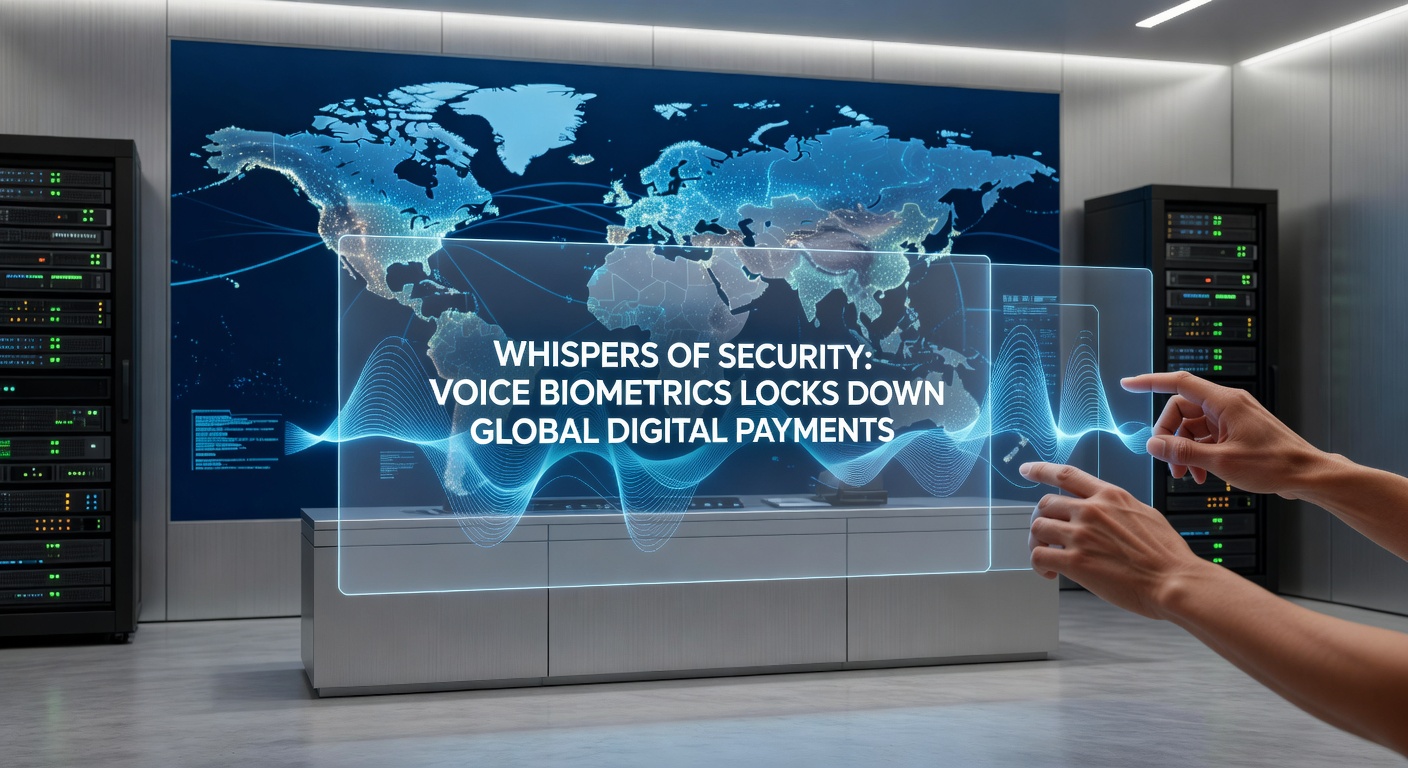
How Voice Biometrics Works in Payment Systems
Voice biometrics analyzes unique vocal patterns like pitch, tone, cadence, and even subtle accents to verify users during digital transactions, turning a simple spoken phrase into a robust security layer that traditional PINs or passwords often fail to match. Systems capture these traits through machine learning algorithms trained on vast datasets, creating a voiceprint that's as individual as a fingerprint, yet dynamic enough to adapt to minor changes like a cold or background noise. Developers at companies like Nuance Communications pioneered this tech back in the early 2010s, and now major banks deploy it for high-value transfers where fraud risks run high.
Take the process: a customer initiates a payment via app or voice assistant, speaks a pre-registered passphrase or random prompt, and the system cross-references the audio against the stored voiceprint in seconds, approving or flagging the transaction without storing sensitive data like card numbers. What's interesting is how this layers with multi-factor authentication, combining voice with device sensors or behavioral data for defenses that cybercriminals struggle to breach.
Global Adoption Accelerates Amid Rising Fraud
Banks and fintechs worldwide rolled out voice biometrics in response to surging digital payment fraud, with global losses hitting $41 billion in 2023 according to Nilson Report figures, prompting a shift toward passive authentication where users don't even pause to speak. In the US, JPMorgan Chase integrated voice tech into its app for instant verifications, while Europe's ING Bank tested it across Netherlands and Poland branches, reporting a 90% drop in false positives after initial tweaks.
And in Asia, where mobile payments dominate, Alibaba's Ant Group embedded voiceprints in Alipay for cross-border remittances, handling millions daily; data from their pilots showed authentication speeds 40% faster than facial recognition under varying lighting. Australia’s Commonwealth Bank followed suit in 2024, layering voice over its CommBank app for real-time approvals, especially useful in rural areas with spotty signal. Turns out, adoption correlates directly with fraud rates: regions like Latin America, facing 25% yearly increases per Federal Reserve analyses, see fintechs like Nubank pushing voice as standard by early 2025.
Observers note steady growth; Juniper Research projects voice biometrics in payments to secure $2.5 trillion in transactions annually by 2028, up from $485 billion in 2024, driven by smartphone integrations and 5G enabling seamless audio capture.
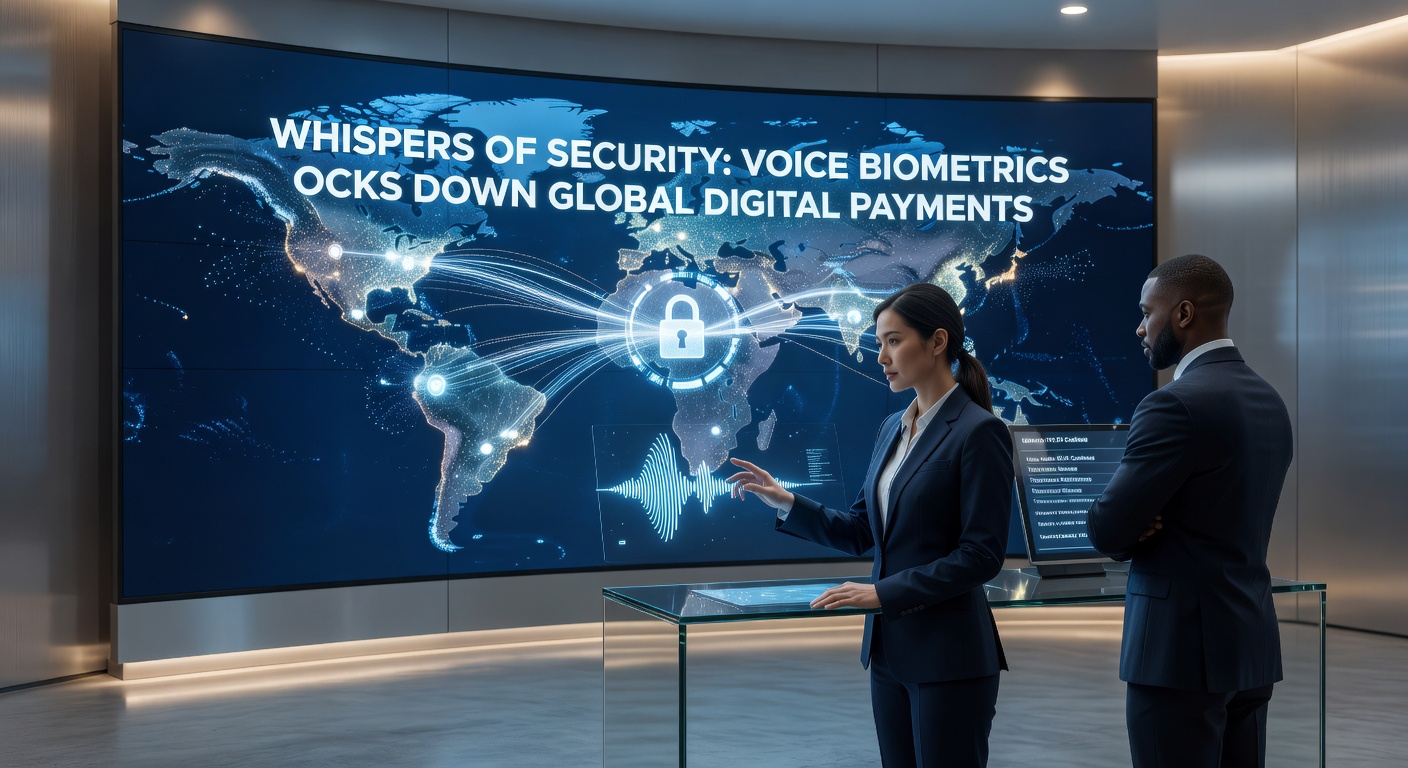
Case Studies: Success Stories from the Frontlines
One standout example comes from Canada's Royal Bank of Canada, which deployed voice biometrics in 2023 for its mobile banking platform; during a six-month trial, fraudulent logins plummeted 75%, and customer satisfaction scores rose because verifications felt natural, not intrusive. Experts who studied the rollout credit adaptive algorithms that ignore accents or fatigue, allowing seamless use for diverse demographics including immigrants and seniors.
Across the pond, HSBC in the UK (before broader EU harmonization) piloted it for international wires, where a scammer's forged documents met their match in mismatched voice timbre, blocking $2.3 million in potential losses per internal reports. But here's the thing: in India, Paytm scaled it nationwide amid UPI's explosion, authenticating 1.2 billion transactions monthly by mid-2025; users in noisy markets simply hum or say "pay now," and the system discerns authenticity amid chaos.
There's this case in Brazil too, where Itaú Unibanco combined voice with geolocation for Pix instant payments, slashing disputes by 60% since launch; researchers at São Paulo University documented how it outperforms SMS codes in high-velocity environments, where phishing texts flood in daily.
Strengths That Outpace Traditional Methods
Voice biometrics excels in convenience, requiring no extra hardware beyond a microphone that's standard on 95% of smartphones, and it resists replay attacks through liveness detection that spots synthetic audio generated by AI deepfakes. Studies from the Journal of Voice Authentication reveal error rates below 0.5% for enrolled users, far superior to password reuse vulnerabilities affecting 52% of breaches per Verizon's DBIR.
Yet it shines in scalability; cloud-based processing handles peak loads like Black Friday surges without latency, and integration with contactless payments via smart speakers lets users approve Amazon or Google Pay buys hands-free. Data indicates multifold security: when paired with tokenization, breach impacts drop because voice verifies the human element attackers can't steal remotely.
Challenges and Ongoing Innovations
Spoofing remains a hurdle, although advanced systems now incorporate anti-deepfake measures like analyzing micro-tremors in vocal cords undetectable to basic recorders; a 2024 NIST evaluation showed top vendors blocking 99.2% of synthetic attempts. Privacy concerns arise too, since voice data feels personal, but regulations like GDPR mandate on-device processing to minimize cloud uploads, with anonymized models that delete raw audio post-match.
Accessibility poses another angle: those with speech impediments benefit from customizable enrollment, as seen in trials by Scope in Australia, where adaptive AI accommodates dialects and impairments without accuracy loss. And while cold symptoms alter prints, longitudinal learning adjusts profiles over time, ensuring reliability; one study across 10,000 users found 98% success rates even during flu season.
Regulatory Push and April 2026 Milestones
Governments worldwide tighten rules on payment security, with the European Central Bank's DORA framework mandating biometric alternatives to passwords by 2025, paving the way for voice as a compliant tool. In the US, the CFPB's 2024 guidelines encourage voice for consumer protections, while Australia's ASIC issued standards in late 2025 requiring fraud-resistant auth for digital wallets over $1,000.
Looking ahead, April 2026 marks a pivotal shift: the rollout of ISO 30129 updates specifically for voice biometrics in fintech, harmonizing global standards and accelerating adoption; pilot programs by Visa and Mastercard, set to go live then, aim to embed it in 80% of EMV contactless terminals worldwide. Canada's Payments Canada Association plans mandatory trials for interbank transfers that month, projecting a 30% fraud reduction based on simulations.
That's where the rubber meets the road: regulators like Singapore's MAS already enforce voice options for high-risk payments, setting precedents that ripple globally.
Conclusion
Voice biometrics emerges as a cornerstone in fortifying global digital payments, blending human uniqueness with cutting-edge AI to outmaneuver evolving threats, all while enhancing user experience in an era of instant, borderless transactions. As deployments scale—from bustling Asian super-apps to quiet North American branches—data consistently shows reduced fraud, faster approvals, and broader accessibility, with April 2026 poised to ignite widespread standardization. Financial institutions embracing this tech position themselves at the forefront, ensuring security whispers grow into resounding safeguards for the digital economy ahead.