Regulatory Reporting Alignments Shaping Verification Workflows in International Freelance Disbursement Networks
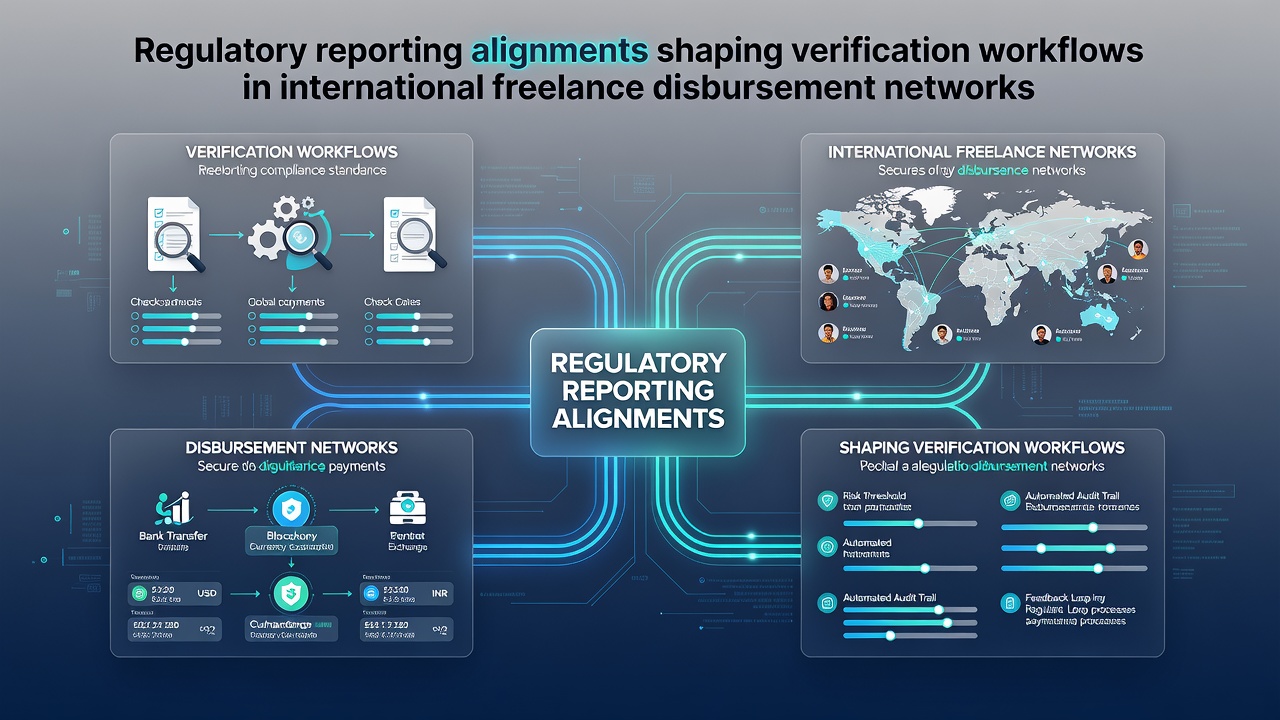
Regulatory reporting alignments have started to reshape verification workflows across international freelance disbursement networks, where platforms connect clients with independent workers spanning multiple countries and currencies. These networks handle payments that must satisfy overlapping rules from tax authorities, anti-money laundering bodies, and data protection agencies, and the alignments between those rules determine how identity checks, transaction monitoring, and record-keeping take place.
Core Regulatory Frameworks Driving Alignment
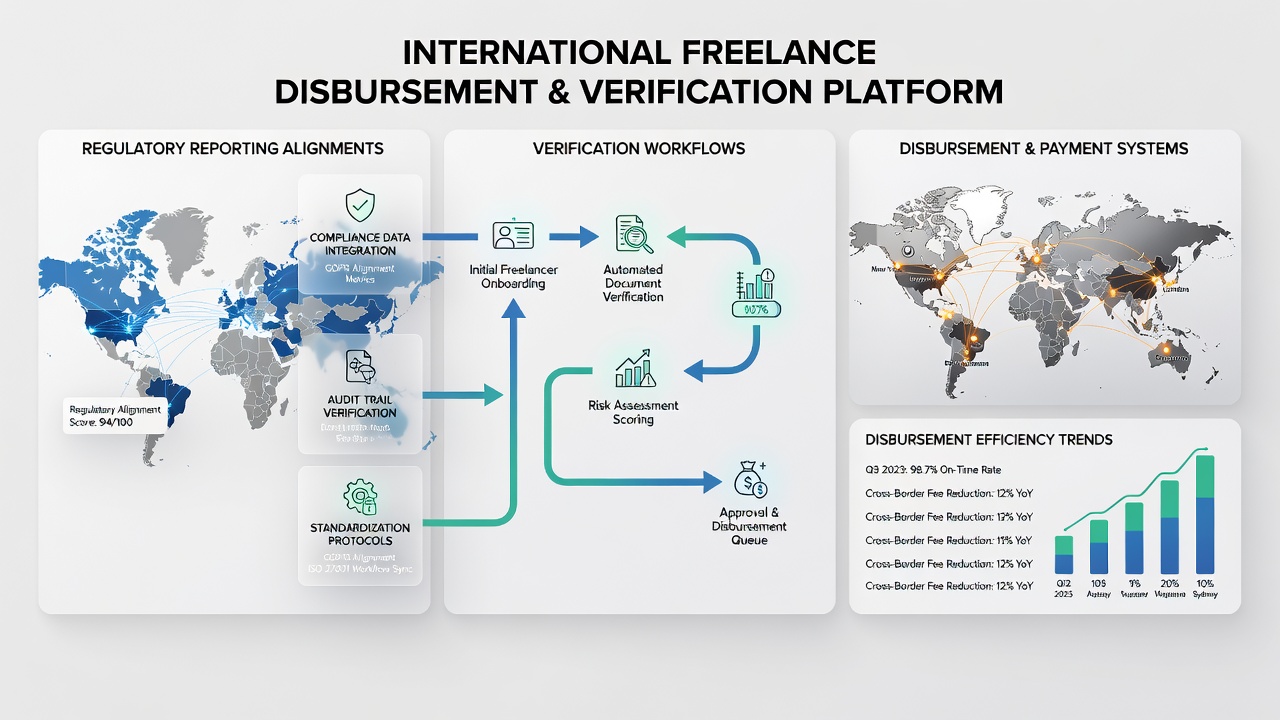
Common Reporting Standard requirements from the OECD encourage automatic exchange of financial account information between participating jurisdictions, while FATCA provisions in the United States impose similar obligations on foreign financial institutions that process payments to U.S. persons. When these frameworks converge on data fields such as taxpayer identification numbers and beneficial ownership details, disbursement platforms adjust their verification sequences to collect the same information once and reuse it across multiple reporting obligations. Observers note that this convergence reduces duplicate data requests yet increases the precision needed at the initial onboarding stage.
European Union directives on anti-money laundering add another layer by mandating customer due diligence that aligns with OECD standards on reportable accounts. Platforms operating in both EU and non-EU corridors therefore synchronize their risk-scoring models so that a single verification workflow satisfies both sets of rules. Data from the Australian Taxation Office shows similar patterns, where alignment with CRS timelines has prompted freelance platforms to embed automated TIN validation into their payout approval pipelines.
Verification Workflow Adjustments in Practice
Workflows now incorporate staged verification gates that trigger based on the destination country of each disbursement. A freelancer receiving funds in Canada triggers a check against the Canada Revenue Agency's prescribed formats before the payment is released, whereas a recipient in Singapore activates an additional layer that cross-references data with the Inland Revenue Authority of Singapore. Because reporting deadlines differ, platforms build calendar-aware triggers that pause or accelerate verification steps accordingly.
Research indicates that these alignments have led to greater use of shared utility databases, where verified identity attributes are stored once and referenced by multiple networks. One study released by a European research consortium found that platforms adopting such shared utilities cut average verification time by roughly 30 percent while still meeting simultaneous CRS and AML reporting windows. The same study documented that error rates in submitted reports dropped when validation occurred at the point of data capture rather than after disbursement.
Impact of July 2026 Regulatory Milestones
July 2026 marks the point at which several jurisdictions will enforce expanded beneficial ownership registers that must be reconciled with CRS filings. Platforms preparing for that date have begun mapping their existing verification fields against the new registers so that any mismatch surfaces before a disbursement is authorized. Those who have studied the upcoming changes note that the alignment requires real-time API connections between disbursement systems and government registries in at least eight additional countries.
Because the July 2026 updates also tighten reporting on digital asset disbursements, networks that already handle cryptocurrency payouts to freelancers have introduced wallet address screening steps that feed directly into the same verification record used for fiat reporting. This integration ensures a single audit trail satisfies both traditional and emerging asset classes.
Regional Variations and Their Consequences
North American platforms tend to emphasize IRS Form 1099-NEC alignment with CRS data, whereas Asia-Pacific operators focus on matching data against both CRS and local goods-and-services tax reporting. The result is a patchwork of verification sequences that nevertheless converge on identical core data points. Industry reports from the Asia-Pacific Economic Cooperation forum highlight that this convergence has encouraged development of modular verification engines that swap regional modules without altering the underlying data model.
Platforms serving freelancers in Latin America face additional currency-control reporting that must align with CRS fields. Verification workflows in those corridors therefore insert a step that confirms the source of funds against local central-bank requirements before the CRS data package is assembled. The sequencing prevents later rejections when the combined report reaches the receiving jurisdiction.
Conclusion
Regulatory reporting alignments continue to standardize the data points collected during verification while preserving regional sequencing differences that reflect local deadlines and risk profiles. International freelance disbursement networks that map these alignments early have built workflows capable of satisfying multiple jurisdictions through shared data capture and automated cross-checks. As the July 2026 milestones approach, further refinements in beneficial ownership validation and digital asset screening are expected to follow the same pattern of convergence on core attributes paired with jurisdiction-specific triggers.