Milestone Verification Steps That Trigger Phased Invoicing Within Infrastructure Development Financing Platforms
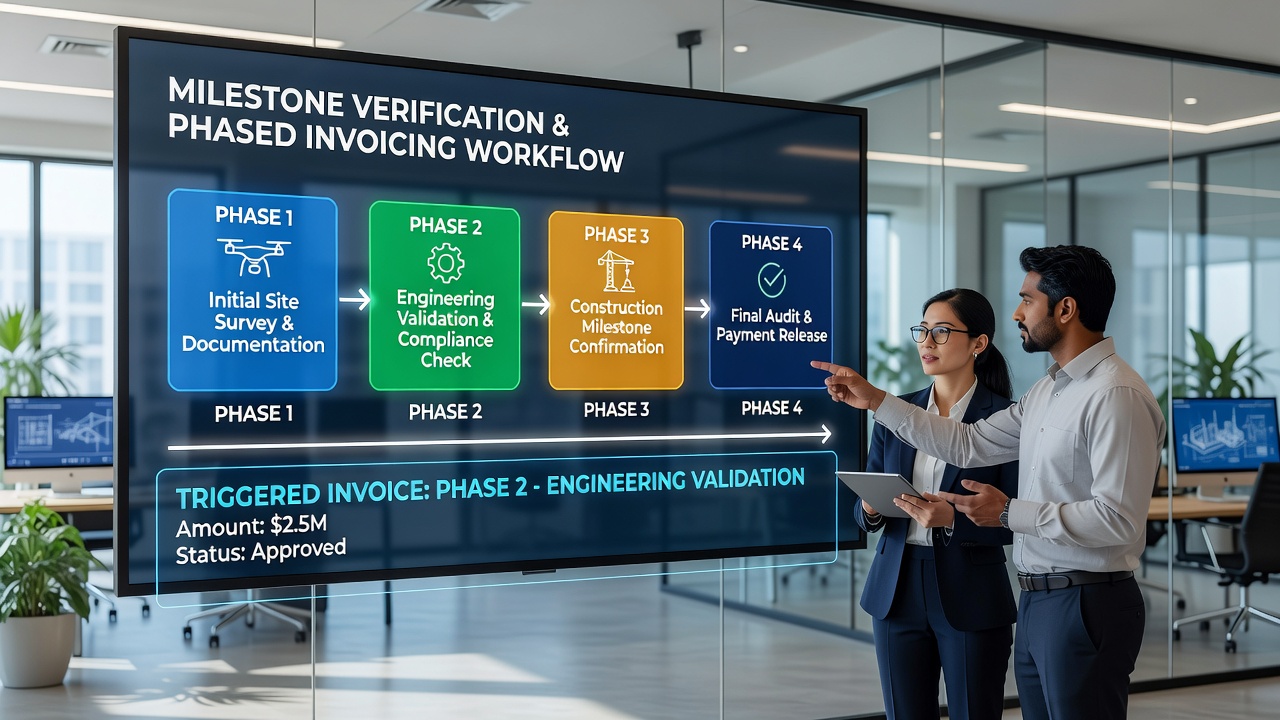
Financing platforms for infrastructure projects release funds through phased invoicing that depends on verified milestones rather than upfront lump sums, and this approach aligns disbursements with documented progress in construction and compliance activities. Observers note that platforms integrate automated checks alongside manual reviews to confirm each stage before triggering the next invoice cycle, which reduces exposure to incomplete work or regulatory gaps.
Core Components of Milestone Structures
Projects typically divide into sequential phases such as site preparation, foundation completion, structural erection, and systems integration, with each phase carrying predefined verification criteria that platforms enforce before approving invoice releases. Data from infrastructure financing reports shows these structures often tie 20 to 30 percent of total project value to individual milestones, creating a sequence where earlier verifications directly influence later funding flows.
Verification begins with submission of technical reports and photographic evidence through the platform interface, followed by cross-checks against engineering specifications and local permitting records. Those who've studied these systems find that platforms flag discrepancies automatically when submitted data falls outside expected parameters, prompting additional documentation before any invoice processes forward.
Primary Verification Steps in Practice
Initial steps center on document validation where project teams upload contracts, inspection certificates, and material test results for platform algorithms to scan against stored templates. Research indicates that platforms then escalate qualifying submissions to human reviewers who conduct site visits or request drone footage for remote confirmation, particularly in large-scale developments spanning multiple jurisdictions.
Subsequent checks involve financial reconciliation modules that compare cumulative expenditures against approved budgets for the completed phase, ensuring invoiced amounts match verified quantities of work performed. Platforms integrate third-party data feeds from regulatory bodies to confirm environmental and safety compliance at each checkpoint, and this linkage prevents invoice triggers until all clearances register as current.
Role of Third-Party Audits and Inspections
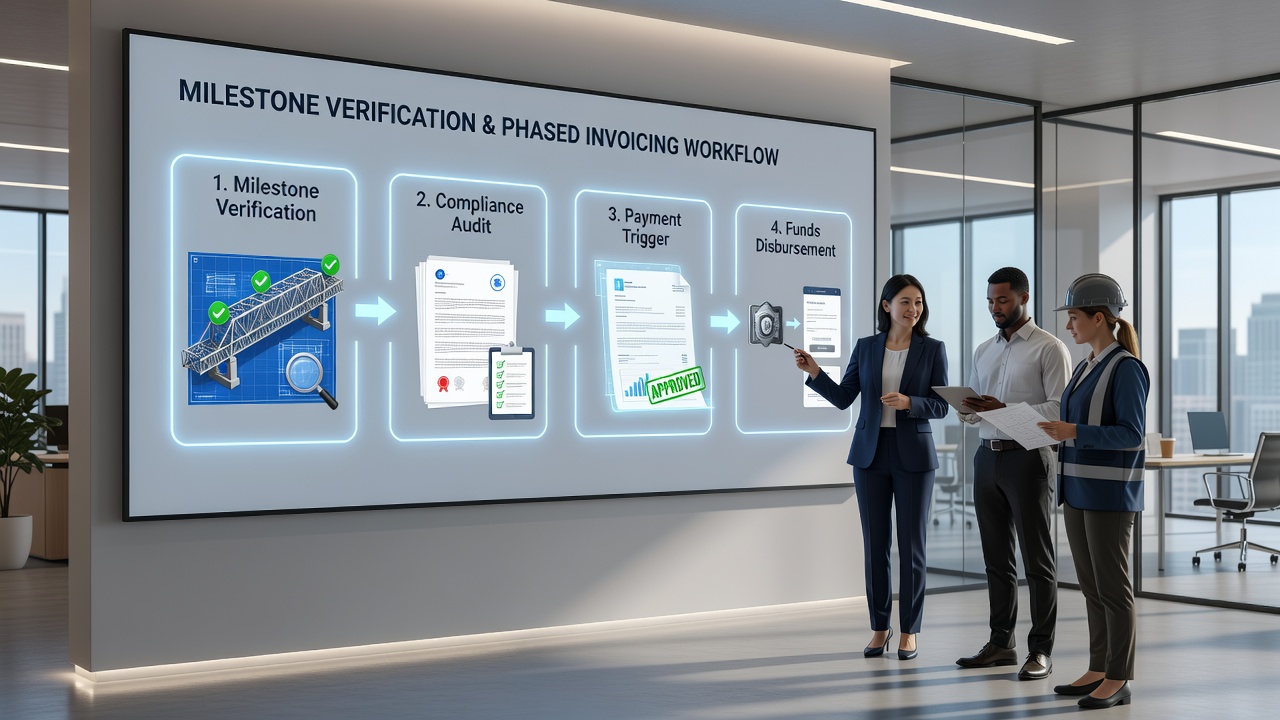
Independent auditors enter the process after platform algorithms clear initial submissions, performing on-site assessments that generate standardized reports uploaded directly into the financing system. Figures reveal that audits in July 2026 increasingly incorporate real-time sensor data from embedded project equipment, allowing platforms to cross-reference physical measurements with submitted claims before phased invoices activate. External verification reduces internal bias, and platforms often require sign-off from at least two separate entities for milestones exceeding certain value thresholds.
Technology Integration and Automation
Modern platforms deploy blockchain-based ledgers to timestamp each verification event, creating immutable records that link milestone approvals to subsequent invoice generations. According to Infrastructure Australia reports, these ledgers help synchronize data across contractors, financiers, and regulators in multi-year projects where delays in one verification step cascade through the entire payment schedule. Automated alerts notify stakeholders when verification timelines approach, prompting timely submissions that keep invoicing cycles on track.
Integration with geographic information systems allows platforms to overlay submitted progress data against satellite imagery for spatial validation, adding another layer before funds release. Those monitoring these developments observe that such tools gained wider adoption following regulatory updates in several regions during 2025, which emphasized transparency in public-private infrastructure partnerships.
Compliance and Regulatory Alignment
Verification processes embed checks for regional standards, including labor regulations and procurement rules, before any invoice moves to the payment queue. Platforms pull data from government databases in real time to confirm contractor licensing and tax status remain active at the moment of milestone approval. One study from the European Investment Bank highlighted how these alignments prevent funding pauses that otherwise occur when compliance documentation lags behind construction timelines.
Dispute resolution protocols activate if verification fails at any stage, routing the matter through arbitration modules within the platform rather than halting all downstream invoicing. Researchers discovered that structured escalation paths keep projects moving while issues resolve, with temporary holds applied only to the affected phase.
Conclusion
Milestone verification steps form the backbone of phased invoicing mechanisms in infrastructure financing platforms, combining document checks, audits, and automated validations to control fund releases. These processes ensure payments correspond to confirmed progress while incorporating compliance data from multiple sources. Platforms continue evolving their verification layers to handle complex projects, maintaining alignment between physical advancement and financial disbursements across global development initiatives.