Merchant Category Codes and Their Impact on Approval Rates for Subscription Renewals in Niche Hobby Communities
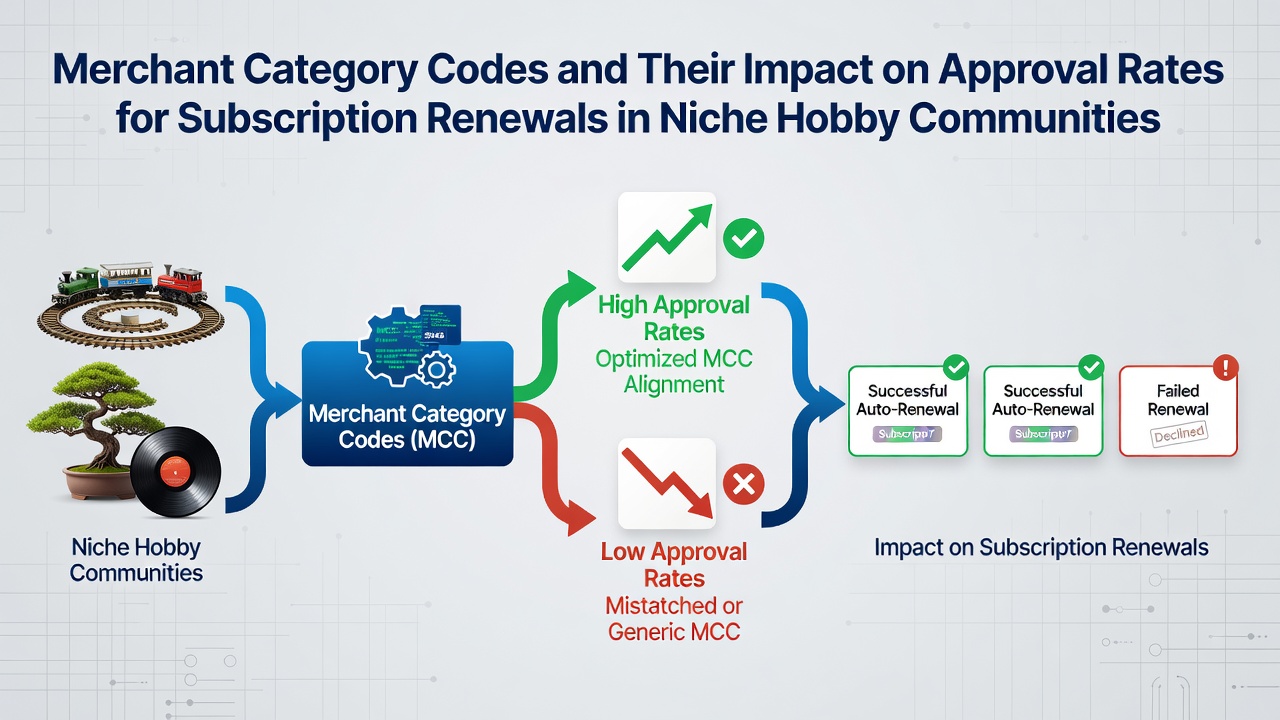
Merchant category codes function as standardized identifiers that classify businesses according to the primary goods or services they provide, and these codes directly influence how payment processors evaluate recurring transactions in specialized hobby sectors. Subscription services for model railroading supplies, collectible card game expansions, and handmade crafting kits often operate under specific codes that signal particular risk profiles to issuing banks.
Core Mechanics of Merchant Category Codes in Payment Systems
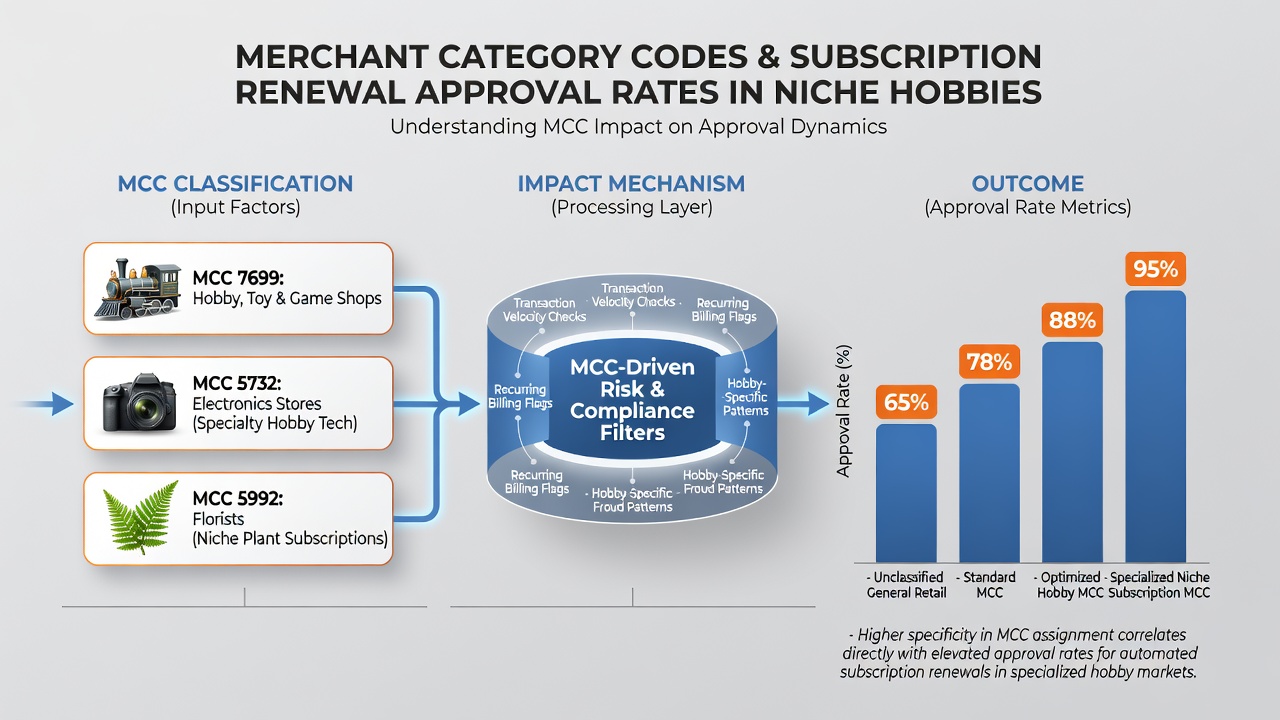
Card networks assign these four-digit codes at the merchant account level, which then travel with every authorization request including monthly renewals. Processors use the codes to apply tailored rules for fraud detection, interchange fees, and approval thresholds, while hobby-focused merchants frequently receive classifications such as 5946 for hobby shops or 5970 for artist supply stores. When a renewal attempt occurs, the code helps determine whether the transaction aligns with expected patterns for that merchant type, and deviations can trigger additional verification steps that reduce approval likelihood.
Researchers at the Bank of Canada have documented how code-based filtering contributes to variance in recurring payment success rates across different merchant segments. Data from their 2025 payments report shows that merchants in niche retail categories experience measurable differences in authorization outcomes compared with general merchandise categories, particularly when transaction velocity increases during renewal cycles.
Patterns in Niche Hobby Subscription Renewals
Communities centered on miniature wargaming, scale modeling, and fiber arts maintain active subscription models that deliver curated product boxes or digital access on fixed schedules. These services rely on stored credentials for seamless renewals, yet the assigned merchant category code can affect how acquirers route requests through risk engines. Observers note that codes tied to hobby retail sometimes carry higher scrutiny because historical chargeback data in these segments reflects occasional disputes over product fit or delayed shipments.
One study of recurring billing platforms revealed that hobby merchants using code 5946 encountered approval rate fluctuations of up to 8 percent during peak renewal periods when compared against baseline figures for similar transaction volumes. The variation stems from issuer-side models that weigh merchant type against customer spending history and geographic factors, while automated systems apply stricter velocity checks to codes associated with discretionary purchases.
Regulatory Context and Data Availability in Mid-2026
By June 2026, updated reporting requirements from the Reserve Bank of Australia had expanded the granularity of category-level transaction statistics available to processors, enabling more precise calibration of approval algorithms. These changes provided clearer visibility into how hobby-related codes performed across cross-border renewals, particularly for communities serving international collectors of rare trading cards and limited-edition miniatures.
Factors That Amplify Code-Related Effects
Several operational variables interact with merchant category codes to shape renewal outcomes. High-frequency renewals common in hobby subscriptions can exceed thresholds embedded in issuer rules when the code matches categories flagged for discretionary spending. Geographic concentration of subscribers also plays a role, as certain regions apply additional screening to codes linked to collectibles that sometimes involve secondary market resale activity.
Take one processor serving European hobby platforms who adjusted routing logic after reviewing category-specific decline reasons supplied by card networks. The adjustments produced steadier renewal flows for merchants previously experiencing intermittent blocks, and the modifications relied on aligning actual transaction characteristics more closely with the assigned code descriptors rather than broad risk buckets.
Evidence from industry analyses indicates that merchants who maintain consistent product descriptions and shipping timelines within their category code experience fewer mismatches during automated reviews. Hobby businesses that diversify product offerings while remaining under a single code sometimes trigger reclassification reviews, which can temporarily alter approval patterns until the code stabilizes.
Practical Implications for Hobby Community Platforms
Subscription platforms supporting niche interests must coordinate closely with acquirers to ensure the selected merchant category code accurately reflects their primary activity. Mismatches between the code and actual sales mix have led to elevated decline rates in documented cases involving digital access passes for online miniature painting tutorials and physical kit subscriptions. Processors recommend periodic audits of category assignments, especially when community-driven platforms expand into adjacent product lines such as apparel or event tickets.
According to figures released by the European Central Bank in early 2026, recurring payment approval rates in specialized retail segments showed modest improvement after merchants implemented clearer segmentation of their category usage. The data covered multiple hobby verticals and highlighted that precise code application correlates with more predictable authorization results across renewal batches.
Conclusion
Merchant category codes continue to serve as foundational elements in the authorization process for subscription renewals within niche hobby communities. Their assignment shapes how issuers assess risk, apply velocity limits, and route transactions, directly affecting the consistency of recurring revenue for hobby merchants. Ongoing refinements in reporting standards and processor practices provide additional tools for aligning code usage with actual business operations, supporting more reliable renewal performance as hobby subscription models evolve through 2026 and beyond.