How Varying International Regulations Influence Processing Speeds for Cross-Border Credit Transfers Within Subscription Billing Platforms
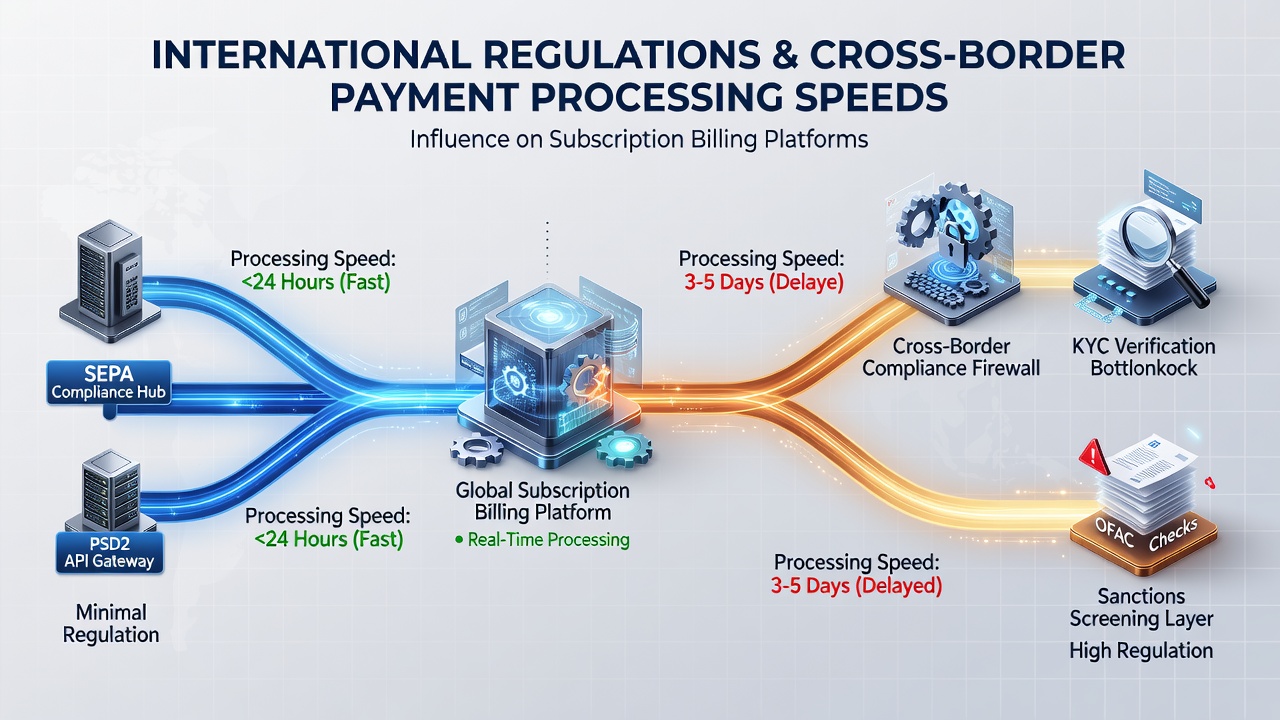
Subscription billing platforms handle recurring credit transfers that cross multiple national borders on a daily basis, and these operations encounter different regulatory requirements depending on the jurisdictions involved. Regulations shape every stage of the transaction flow, from initial authorization checks through final settlement, which directly affects how quickly funds move between merchants and customers.
Regulatory Layers That Extend Verification Timelines
Anti-money laundering rules require platforms to perform customer due diligence before processing any cross-border payment, and this step often includes document verification plus risk scoring that varies by country. The European Union's revised Payment Services Directive introduced strong customer authentication mandates that add extra confirmation layers for transactions originating outside the single market, whereas similar screening in Asia-Pacific regions emphasizes real-time monitoring against dynamic sanctions lists maintained by local authorities. Observers note that these overlapping requirements create sequential approval queues rather than parallel processing, which stretches average settlement times from hours into multiple business days when subscriptions span several regulatory zones.
Data localization statutes further complicate the picture because some nations insist that transaction records remain stored within their borders, forcing platforms to route data through regional servers before clearing can begin. This routing adds network hops and compliance checkpoints that accumulate delays, especially when subscription services aggregate payments from users in both the European Economic Area and jurisdictions with stricter residency rules. Research from the Bank for International Settlements indicates that such localization demands increased average processing durations by measurable percentages across tested multi-country billing cycles during 2025.
Regional Differences in Approval and Settlement Requirements
North American frameworks focus heavily on sanctions screening administered through the Office of Foreign Assets Control, which platforms must complete before initiating any outbound transfer, and this process runs independently of European Central Bank oversight on payment initiation services. Platforms operating subscription models that serve customers across these zones therefore maintain separate compliance pipelines, each with its own timing constraints. Data shows that when a single recurring charge triggers reviews under both systems, the combined sequence extends authorization windows by at least one full business day in most documented cases.
Asia-Pacific regulators apply additional layers around foreign exchange controls and reporting thresholds that differ from country to country, requiring platforms to pause transfers until currency conversion approvals clear local central banks. One study revealed that subscription platforms handling payments from Singaporean and Australian users encountered cumulative delays when both jurisdictions mandated separate reporting filings before settlement could proceed. These staggered requirements prevent simultaneous processing across regions and push overall cycle times higher during peak renewal periods.
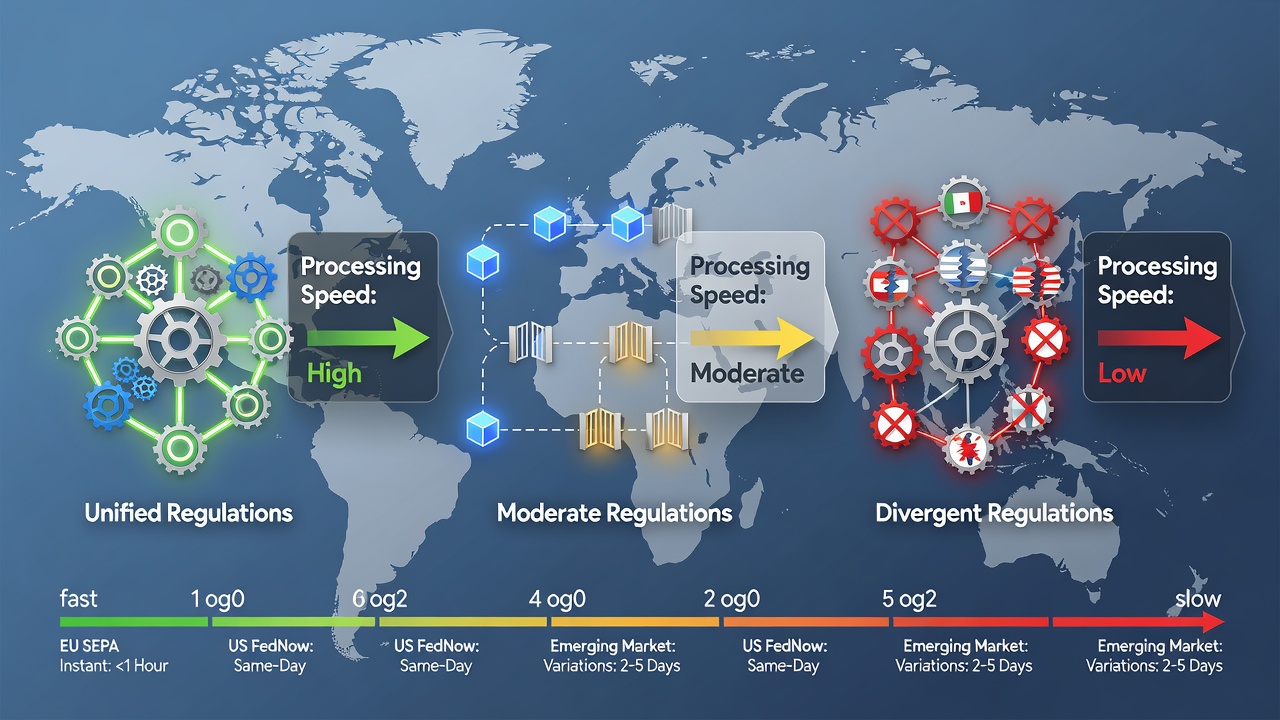
Adaptations Platforms Use to Manage Regulatory Friction
Subscription billing providers integrate automated rule engines that detect the regulatory profile of each payer's location and apply the corresponding verification sequence without manual intervention, which reduces but does not eliminate added processing time. Some platforms batch compliance checks for recurring charges that fall below certain thresholds, yet regulators in multiple regions prohibit such batching when transactions involve higher-risk jurisdictions. Those who've studied operational data from large billing networks report that platforms using predictive routing based on historical regulatory response times achieve modestly faster average completions compared with static routing methods.
July 2026 marks the scheduled implementation date for updated cross-border reporting standards under several harmonization initiatives, and early testing indicates these changes will require platforms to incorporate new data fields into every transfer record. The added fields increase message sizes and validation steps, which observers expect will further lengthen processing windows unless platforms upgrade their infrastructure ahead of the deadline. Experts tracking these developments note that subscription services already preparing modular compliance modules stand to absorb the changes with smaller incremental delays than those relying on legacy systems.
Impact on High-Volume Subscription Renewals
High-frequency billing cycles magnify the cumulative effect of regulatory steps because each renewal must navigate the same verification paths as the initial signup. When thousands of cross-border charges process simultaneously, queue buildup at shared compliance nodes creates bottlenecks that affect all pending transfers, not just those flagged for extra review. Figures reveal that platforms serving global audiences experience the widest variance in settlement speeds during month-end renewal surges when multiple regulatory calendars overlap.
Tokenization and standardized messaging formats help platforms pre-validate certain regulatory elements in advance, yet core identity and sanctions checks still occur at the moment of transfer initiation. This timing constraint means even optimized systems cannot bypass the sequential nature of international requirements, which keeps processing speeds tethered to the slowest applicable jurisdiction in any given transaction path.
Conclusion
International regulations establish mandatory sequences of checks that subscription billing platforms must complete before cross-border credit transfers can settle, and these sequences vary significantly by region. The resulting differences in verification depth and ordering directly determine how long each transfer takes, with overlapping requirements from multiple jurisdictions extending timelines the most. Platforms that map regulatory profiles to specific processing routes demonstrate measurable improvements in average speeds, while upcoming updates scheduled for July 2026 will introduce additional data obligations that further shape operational timelines across the sector.