Deciphering Network Traffic Signatures to Bolster Defenses in Electronic Bill Settlement Platforms

Network traffic signatures serve as distinctive patterns within data packets that move through electronic bill settlement platforms, and security teams examine these markers to identify anomalies before they escalate into breaches. Researchers track elements such as packet size distributions, timing intervals between transactions, and protocol header sequences, because these details often reveal attempts to manipulate settlement processes. Data from industry monitoring programs shows that platforms handling recurring payments experience thousands of signature-based probes each day, yet many go unnoticed until aggregated losses appear in monthly reports.
Core Components of Traffic Signatures in Settlement Systems
Packet headers carry essential metadata that analysts decode to build behavioral profiles, and this process begins with isolating source and destination IP addresses alongside TCP flags that indicate session states. Flow records compiled by tools like NetFlow expose volume spikes that deviate from established baselines, while deep packet inspection layers uncover payload inconsistencies that suggest injection attempts. Observers note that settlement platforms processing cross-border invoices generate traffic with characteristic burst patterns during peak reconciliation windows, patterns that deviate sharply when automated scripts attempt to force unauthorized adjustments.
Encryption wrappers add another dimension, since even TLS-encrypted streams leave behind measurable handshake characteristics and certificate validation timings that trained systems can catalog. Studies conducted by university cybersecurity labs have cataloged over 200 distinct signature variants associated with known settlement fraud vectors, each tied to specific manipulation techniques such as duplicate invoice replay or amount inflation during batch processing.
Detection Techniques Applied to Bill Settlement Flows
Machine learning classifiers process historical traffic datasets to establish normal operating envelopes, then flag deviations in real time as settlement requests traverse the network. Statistical models compare current inter-arrival times against historical distributions, and threshold-based alerts trigger when latency signatures suggest man-in-the-middle interference. One documented deployment at a regional processor revealed that combining entropy measurements of packet payloads with sequence number analysis reduced false positives by 37 percent compared with signature matching alone.
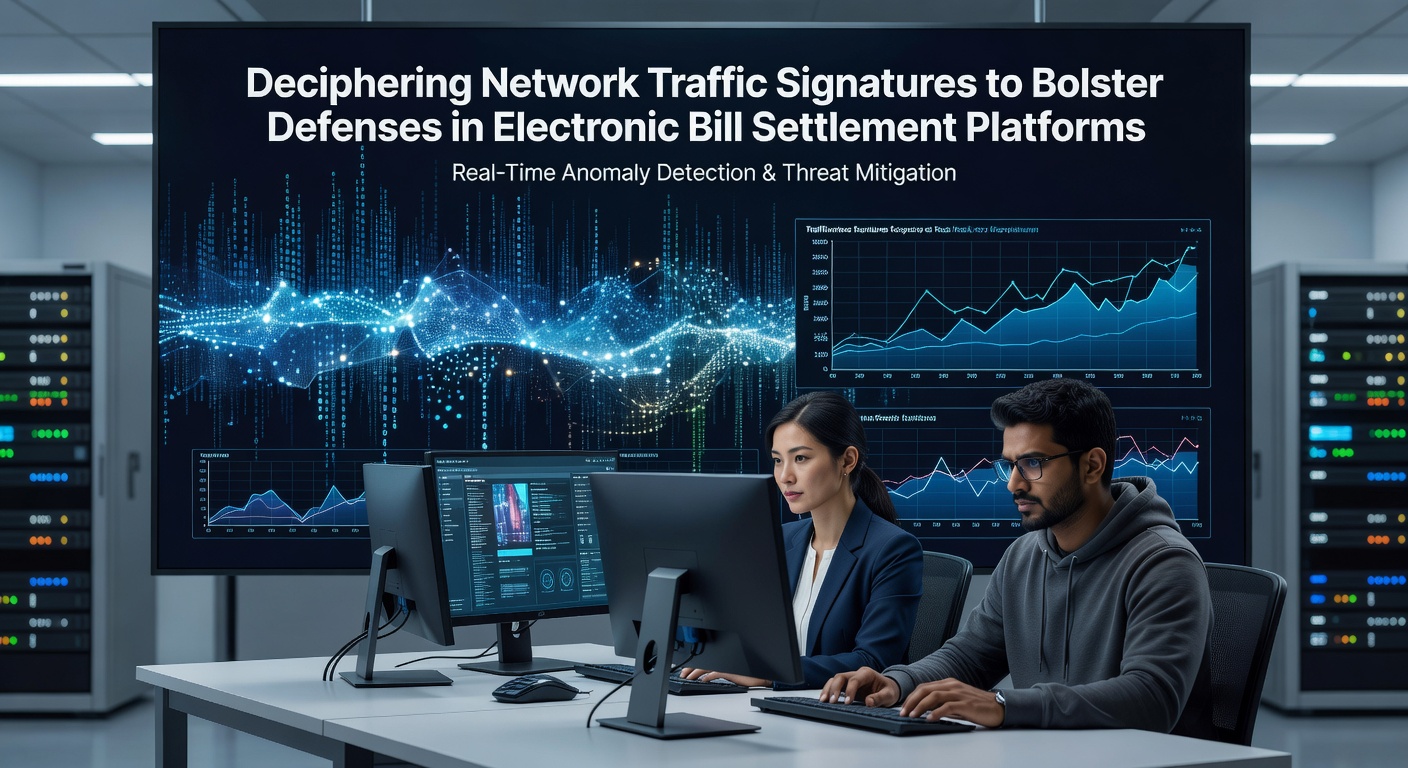
Behavioral analytics platforms integrate these signatures into broader correlation engines that cross-reference settlement traffic against user authentication events, and this layered approach catches coordinated attacks that single-point monitoring might miss. Reports issued by the European Union Agency for Cybersecurity highlight how signature databases updated quarterly have helped operators across member states maintain settlement integrity despite rising volumes of automated probing traffic observed through 2025.
Integration Challenges and Platform Adaptations
Legacy settlement systems often lack native support for high-resolution traffic logging, which forces operators to deploy external sensors that mirror traffic without introducing latency into payment authorization paths. Bandwidth constraints in distributed environments further complicate continuous capture, prompting many organizations to implement sampled collection strategies that still preserve critical signature elements. Data indicates that platforms adopting selective deep inspection on settlement-specific ports achieve detection coverage rates above 92 percent while keeping storage requirements manageable.
Interoperability standards such as those promoted by the PCI Security Standards Council encourage consistent logging formats across vendors, yet implementation timelines vary widely among smaller processors. As of June 2026, several multinational bill settlement networks have begun rolling out standardized signature exchange protocols that allow participating entities to share anonymized threat indicators without exposing proprietary transaction details.
Future Developments in Signature-Based Defenses
Quantum-resistant hashing methods are entering pilot phases within research testbeds focused on settlement security, because existing signature verification routines face potential compromise from advancing computational capabilities. Collaborative initiatives between academic institutions and payment processors aim to produce open signature repositories that accelerate collective defense improvements. Evidence from ongoing trials suggests that federated learning approaches can refine detection models across multiple organizations while preserving data locality requirements.
Conclusion
Deciphering network traffic signatures continues to provide settlement platforms with actionable intelligence that strengthens defenses against evolving threats. Organizations that maintain updated signature libraries and integrate them with existing monitoring frameworks report measurable reductions in successful manipulation attempts. Continued refinement of these techniques, supported by cross-industry data sharing, positions electronic bill settlement systems to handle increasing transaction volumes while preserving operational integrity.