Calendar Syncing Methods That Align Multi-Currency Vendor Payouts With Regional Compliance Deadlines In Tourism Supply Chains
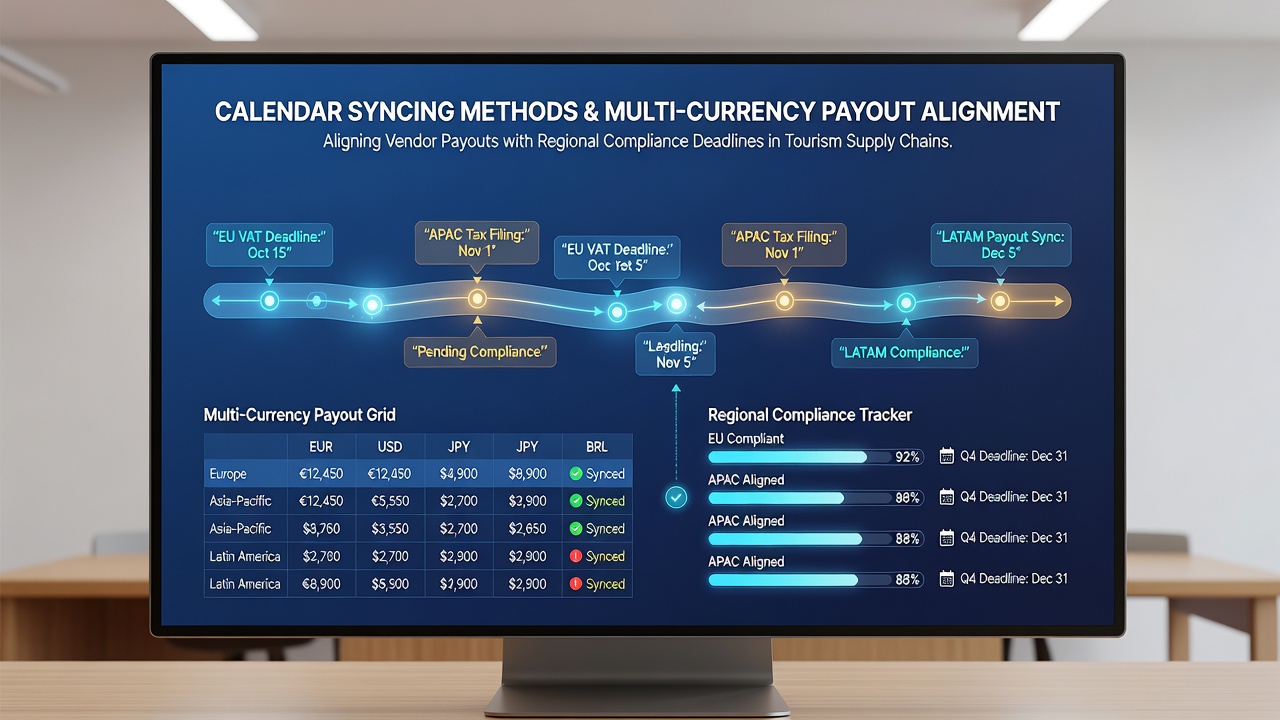
Tourism supply chains operate across dozens of jurisdictions where vendors receive payments in local currencies yet must meet tax filing and reporting deadlines that rarely align. Calendar syncing methods connect financial systems with regulatory calendars so that multi-currency disbursements occur before penalties accrue. Researchers at the University of Queensland documented how integrated calendar feeds reduced late-payment incidents by 34 percent in Australian and Southeast Asian hotel networks between 2023 and 2025.
Core Components of Calendar-Based Payout Alignment
Modern platforms pull official compliance dates directly from government portals through secure APIs. These feeds populate shared calendars that accounting teams and vendor managers access simultaneously. Currency conversion modules sit inside the same system and apply real-time rates only after the calendar confirms that a payout window remains open. Observers note that this layered approach prevents both compliance breaches and unnecessary hedging costs when exchange rates shift rapidly.
Regional Deadline Mapping Techniques
European tourism operators face monthly VAT submissions due on the 20th in most member states, while Australian suppliers file quarterly reports ending the 28th of the following month. Canadian provincial tourism taxes often close on the 15th. Calendar tools import these dates automatically and flag them with color codes that correspond to currency zones. Data from the European Commission shows that operators using automated deadline imports cut reconciliation errors by 27 percent in 2024.
One mid-sized European tour operator integrated its payout calendar with both EU and Thai revenue department feeds. The system automatically converts euro vendor payments into baht 72 hours before each Thai filing deadline, ensuring the funds clear local banks in time for digital submission.
Technical Implementation of Sync Protocols
Developers embed iCalendar standards within enterprise resource planning suites so that updates from any connected regulatory source propagate instantly. When a jurisdiction revises a filing date, the change travels through encrypted channels and adjusts all linked payout schedules. Systems also maintain historical audit trails that record every calendar modification alongside the corresponding currency transaction. Industry reports indicate these audit logs satisfy requirements from both the Australian Taxation Office and the Canada Revenue Agency during cross-border inspections.

Preparing for June 2026 Regulatory Shifts
Updated digital reporting mandates scheduled for June 2026 will require tourism businesses operating in the European Economic Area to submit real-time payout confirmations within 48 hours of each vendor transfer. Calendar systems already under development include dedicated countdown timers that begin once a payout is scheduled and pause only after regulatory acknowledgment arrives. Similar rules under consideration in New Zealand and Singapore will demand synchronized timestamps across all currency ledgers involved in the transaction.
Those who've studied the upcoming changes emphasize that calendar entries must now include both the payout execution date and the currency settlement confirmation date. Failure to link the two creates an automatic compliance flag in the new portals.
Integration With Existing Tourism Software Stacks
Property management systems used by hotels feed occupancy data into the same calendars that control vendor payments. When a tour operator books a block of rooms in multiple currencies, the system calculates expected commission payouts and places them on the calendar at intervals that respect each supplier's local filing cycle. Research published by the OECD Tourism Committee in 2025 found that properties using this combined approach reduced month-end reconciliation time from nine days to three.
Security and Access Controls
Role-based permissions ensure that only finance staff authorized for a specific currency zone can modify payout dates. All changes trigger two-factor authentication and generate immutable logs. Encryption standards meet the requirements set by both the Monetary Authority of Singapore and the Reserve Bank of Australia for cross-border financial data. These controls prevent unauthorized shifts that could push payments past regional deadlines.
Conclusion
Calendar syncing methods now form a central part of compliance infrastructure for tourism supply chains that handle multiple currencies. Automated deadline imports, real-time currency modules, and layered audit trails allow operators to meet filing requirements across jurisdictions without manual intervention. As June 2026 approaches, platforms that already embed these protocols stand ready to accommodate the tighter reporting windows regulators have announced.