Balancing Act: Synchronizing Inventory Updates with Instant Payment Confirmations in Retail Point Systems
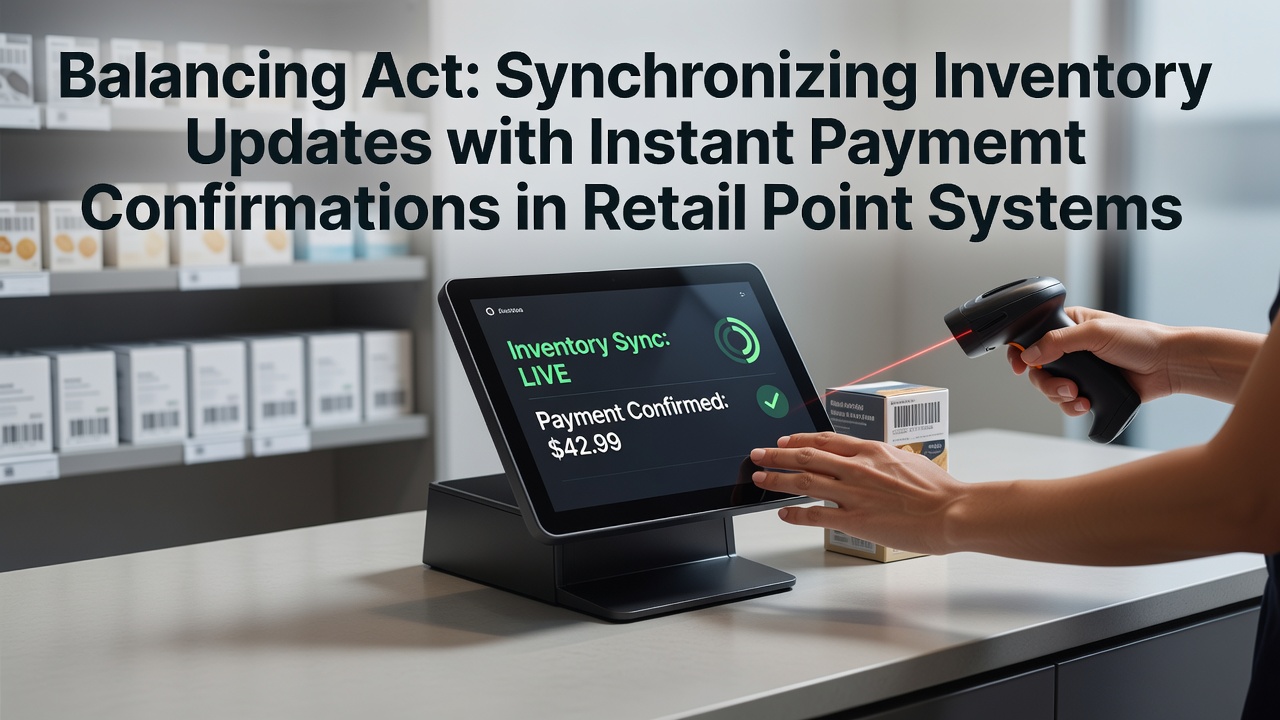
Retail point systems handle thousands of transactions daily, and the connection between payment confirmations and inventory adjustments determines how accurately stock levels reflect actual sales. Systems that link these processes in real time reduce discrepancies that arise when updates lag behind completed sales, and observers note that such synchronization relies on integrated software layers connecting payment processors directly to inventory databases. Payment confirmation occurs the moment a card network or digital wallet authorizes a transaction, and at that instant the point-of-sale terminal sends a signal to decrement stock counts for each item purchased. This sequence prevents overselling because inventory records adjust before the next customer reaches the checkout, while data from the European Central Bank shows that real-time payment messaging volumes in the euro area exceeded 120 billion transactions in 2025.
Core Mechanisms Driving Synchronization
Point-of-sale software uses application programming interfaces to transmit payment status to backend inventory modules without manual intervention. When authorization succeeds the API call triggers an atomic update, meaning the inventory change and payment record commit together in a single database transaction, and this approach limits partial updates that could leave stock figures inconsistent with sales data. Hardware components such as barcode scanners and receipt printers operate alongside these software routines, yet the critical path runs through the payment terminal firmware that flags a confirmed payment before releasing the inventory adjustment command. Retail chains operating across multiple locations often deploy cloud-hosted ledgers that receive these updates within milliseconds, allowing regional warehouses to monitor sell-through rates without waiting for batch file transfers at end of day.
Latency and Error Handling in Live Environments
Network delays between the terminal and central servers can interrupt the synchronization sequence, so developers incorporate retry logic and local caching that stores the pending inventory change until connectivity resumes. In June 2026 several major retailers plan to roll out edge-computing nodes at store level that will process both payment confirmations and inventory decrements locally before syncing with headquarters systems, reducing exposure to wide-area network outages. Error detection routines compare transaction logs against inventory movement reports at regular intervals, and any mismatch prompts an alert that routes to store managers for manual reconciliation. Studies from Canadian retail technology researchers indicate that stores using automated reconciliation cut stock variance by 37 percent compared with locations relying solely on nightly batch processes.
Multi-Channel Considerations
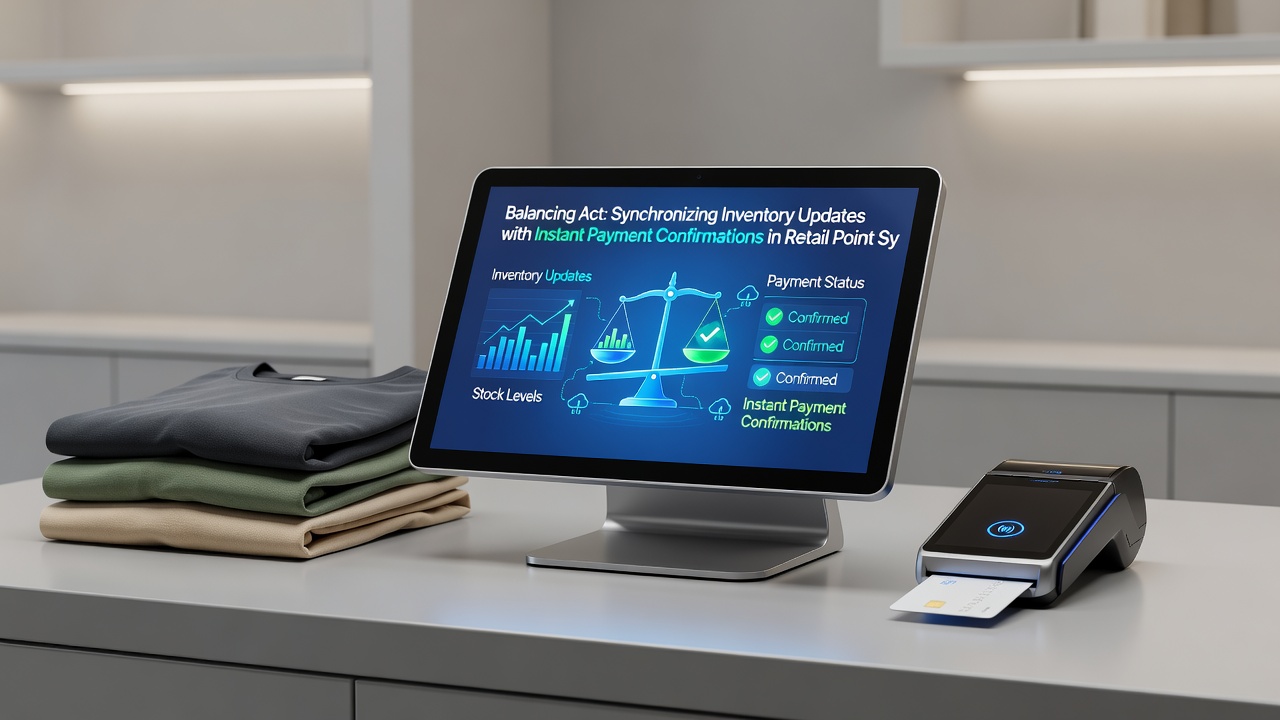
Omnichannel operations add complexity because a sale completed through a mobile app must still update the same inventory pool used by physical registers. Systems therefore maintain a single source of truth in a centralized database while exposing endpoints that accept updates from both in-store terminals and online order management platforms, and this architecture ensures that an item purchased online disappears from available stock visible to cashiers within the same second. Returns and voids require reverse synchronization, where a confirmed refund triggers an inventory increment rather than a decrement. Point systems that treat refunds identically to sales but with opposite inventory movement maintain balance across both directions, and analysts tracking North American retail data observe fewer negative inventory events when refund workflows mirror the original payment confirmation path.
Security and Compliance Layers
Payment confirmations carry sensitive card data that must remain isolated from inventory records, so tokenization replaces actual account numbers with non-sensitive references before the inventory update request leaves the terminal. This separation satisfies requirements set by payment card industry standards while still allowing the inventory module to associate each stock change with a verified transaction identifier. Audit trails capture both the payment authorization code and the inventory record identifier in linked log entries, enabling regulators or internal compliance teams to trace any given sale from confirmation through to stock adjustment. Jurisdictions in the Asia-Pacific region have begun requiring such dual-entry logging for retailers above a certain transaction volume, prompting software vendors to embed these capabilities as standard features rather than optional modules.
Future Developments Expected by Mid-2026
Industry groups tracking point-of-sale evolution expect wider adoption of standardized messaging formats that embed inventory update instructions inside the same ISO 20022 payment message used for authorization. When this format becomes common, the payment processor itself can forward the inventory adjustment request, shortening the chain of systems that must coordinate and lowering the chance of dropped updates during high-volume periods such as holiday sales events. Retail technology conferences scheduled for early 2026 will showcase pilot programs that combine near-field communication payments with instant radio-frequency identification tag updates, allowing a scanned product to trigger both payment initiation and inventory removal in one physical action at the register.
Conclusion
Synchronization between instant payment confirmations and inventory updates rests on tightly coupled software interfaces, local caching strategies, and standardized data formats that continue to evolve. Retail operations that maintain this alignment report fewer stockouts and reduced manual corrections, while emerging standards scheduled for 2026 promise to embed inventory instructions directly inside payment messages. The result is a continuous feedback loop where each confirmed sale produces an immediate, accurate reflection in available stock across every sales channel.