Audit Trail Reconstruction Techniques in Shared Account Reconciliation for Joint Venture Billing Cycles
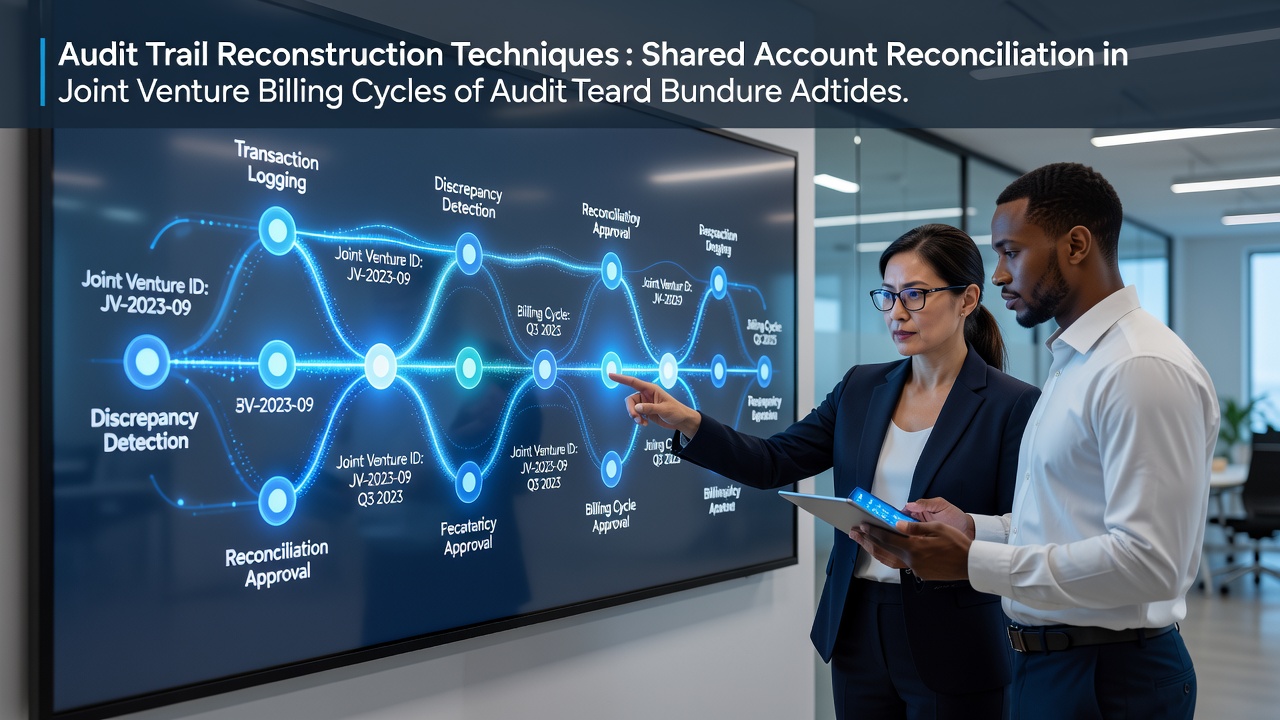
Joint venture billing cycles often involve multiple partners who share accounts and allocate costs across exploration, production, or service operations, and audit trail reconstruction plays a central role in verifying each transaction's origin, timing, and authorization. Researchers have documented how incomplete or fragmented logs create discrepancies that delay settlements, particularly when partners operate under different accounting systems or regulatory frameworks. Data from industry analyses shows these mismatches frequently surface during quarterly or semi-annual close periods when cumulative entries must align across entities.
Core Challenges in Multi-Partner Environments
Shared accounts in joint ventures accumulate entries from operators, non-operators, and service providers, each maintaining separate ledgers that record the same underlying events with slight variations in format or timing. Observers note that currency conversions, overhead allocations, and tax withholdings introduce further variables that standard reconciliation tools struggle to trace backward without detailed reconstruction methods. In June 2026, updates to international accounting guidelines emphasized the need for granular timestamp and user-action logging to support cross-border verification processes.
Log Aggregation and Sequence Mapping
One established technique begins with centralized log aggregation, where system administrators collect event records from all participating entities into a unified repository before applying sequence-mapping algorithms. These algorithms sort entries by transaction identifiers, partner codes, and billing cycle dates, allowing analysts to rebuild chronological chains even when source systems use different time zones or batch-processing schedules. Studies conducted by academic teams have shown that combining native database logs with application-level audit files improves coverage when individual partners employ legacy software that omits certain metadata fields.
Pattern Matching and Anomaly Detection
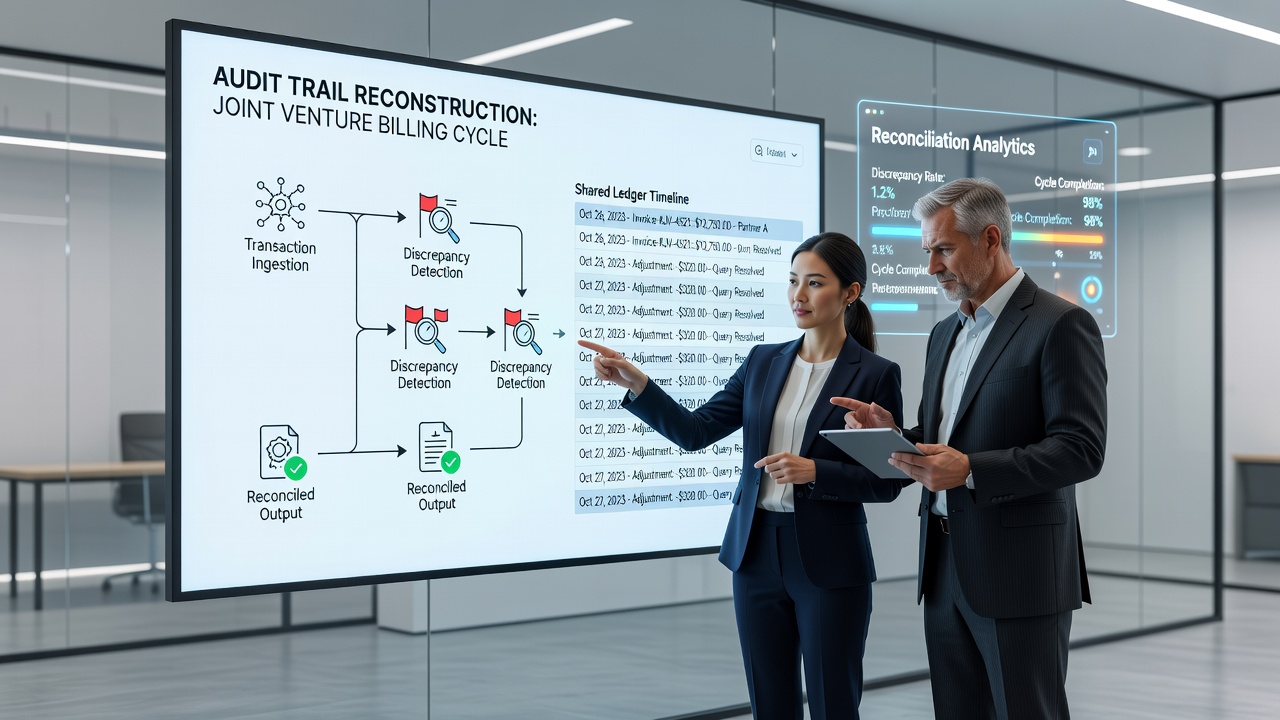
After initial aggregation, pattern-matching routines compare reconstructed sequences against expected billing templates derived from joint operating agreements. Anomalies such as duplicated charges, missing approvals, or mismatched cost centers trigger flagged segments that require manual review or supplemental documentation requests. Figures from professional accounting associations reveal that automated pattern detection reduces manual review time by identifying clusters of related discrepancies rather than isolated line items. And because joint venture agreements often specify tolerance thresholds for variances, these tools incorporate those parameters directly into their scoring models.
Blockchain-Assisted Verification Approaches
Certain joint ventures have adopted distributed ledger entries for selected high-value transactions, creating immutable references that reconstruction tools can query to confirm earlier steps in the billing flow. Reports from research institutions indicate that hybrid systems, which store only cryptographic hashes on-chain while keeping detailed records off-chain, strike a practical balance between transparency and storage efficiency. Those who've implemented such hybrids observe faster dispute resolution because each partner can independently validate the hash chain without exchanging full datasets repeatedly.
Integration with External Regulatory Sources
Reconstruction efforts frequently cross-reference internal logs against filings submitted to government agencies such as the Canada Revenue Agency or the Australian Taxation Office, where statutory reporting deadlines create independent timestamps. This external anchoring helps resolve conflicts when internal partner systems record different effective dates for the same cost incurrence. Academic papers published in accounting journals have examined how these cross-checks improve accuracy in multi-jurisdictional ventures operating across North America and the Asia-Pacific region.
Implementation Considerations and Tool Selection
Organizations evaluating reconstruction platforms typically assess compatibility with existing enterprise resource planning modules used by each joint venture partner. Scalability tests conducted by industry groups demonstrate that cloud-based solutions handle larger data volumes more readily than on-premise installations when billing cycles span multiple years of historical activity. Training programs for reconciliation teams emphasize understanding both the technical mapping functions and the contractual provisions that govern allowable cost categories.
Conclusion
Audit trail reconstruction techniques continue to evolve alongside changes in joint venture structures and regulatory expectations, providing partners with systematic ways to verify shared account activity. Data indicates that consistent application of aggregation, pattern matching, and external cross-referencing reduces settlement disputes and supports timely billing cycle completion across diverse operational settings.